
York Township Previous Resident Sources
One address can lead to several record eras. The current assessment record supplies the parcel, municipal field, and Book/Page that open the latest deed. That deed starts the title chain. Earlier sources then have different custodian and date limits. Use the chart as a routing tool, not as a promise that one search contains every past resident of a York Township property. The legal parcel and document citation are the thread that ties the eras together.
| Source | Years it covers | Where held | What it shows |
|---|---|---|---|
| York County records | From 1749 | York County Archives | Government record books, estates, courts, and related historical series. |
| Recorder and IQS | 1749-1980 remote path | IQS and Recorder | Historic recorded documents, subject to document-level availability. |
| History Center deed microfilm | 1785-1977, stated collection description | York County History Center | Deed-chain support and microfilm fallback. |
| FamilySearch deeds | 1785-1950, stated guidance | FamilySearch and History Center guidance | Potential digitized deed access, subject to platform rules. |
| Landex | Deeds and miscellaneous documents, 1944-present; mortgages, 1974-present | Recorder vendor route | Later title documents and parcel-ID lookup from 2001. |
| Public census schedules | PA septennial: 1786, 1793, 1800, 1807; federal: through 1950 | History Center guide and public census access | Household and place evidence at an enumeration date. |
| Affidavits of death | 1877-1958 | York County Archives | A dated death or estate lead, not a complete family record. |
For an address that falls in the Landex period, start with current assessment and the cited deed. For an older property, move from the citation to IQS, Recorder terminal research, Archives, or History Center material. The dates overlap by source type, so an empty result in one channel is a reason to try the next documented route.
York Township Previous Resident Parcel
Assessment is the starting point for tracing earlier households at a York Township address. Search the York County Real Estate Assessment Data record, then verify the municipality is York Township. Note the current owner, PIDN or UPI, situs address, mailing field, and Record Book/Page. The mailing field is a tax-contact detail. A named owner and mailing address do not establish present occupancy or a past household.
The selected parcel also keeps the research tied to land when a street format changes or a property contains more than one lot. The county Property Viewer can confirm the parcel in map context, while sale, value, road, and property-line information can help reconcile the record. Carry the UPI or PIDN and Book/Page forward. That is safer than relying on a street address alone.
York County's deed-copy instructions show the assessment-to-Book/Page path that begins a previous-resident search.
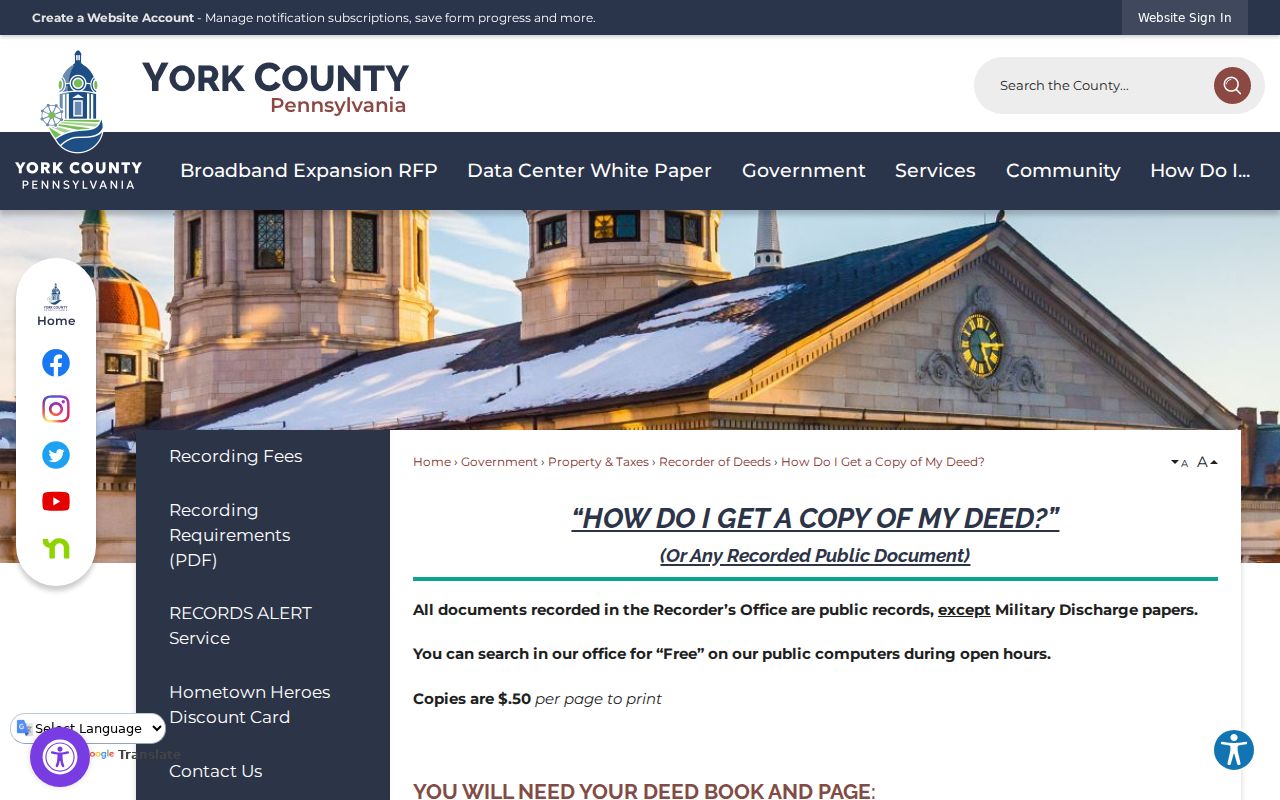
The Book/Page citation directs the inquiry to a recorded document, where the legal description and transfer parties can be checked against the parcel.
York Township Previous Resident Deed Chain
A deed chain tracks property interests backward, not a guaranteed list of everyone who lived there. Begin with the current purchase deed linked from assessment. Record its grantor, grantee, recording date, document number or Book/Page, UPI, and legal description. Then search the seller, the grantor, as an earlier grantee. Compare the lot, block, subdivision, or legal description before deciding the older deed concerns the same parcel. The Recorder can index FKA, DBA, NKA, AKA, trustees, and partners, which makes role and name-variant checks especially useful.
- Open the assessment owner detail and write down the York Township municipality, PIDN or UPI, situs, and Book/Page.
- Find the current deed using its citation and read the transfer parties, recording date, legal description, and parcel references.
- Search the current seller as a prior grantee, then compare the earlier deed's legal description with the current one.
- Repeat one transfer at a time. Search name variants and both grantor and grantee roles when the index permits it.
- When the web route ends, keep the citation and move to IQS, Recorder terminals, Archives, or History Center resources for the relevant period.
- Grantor
- The party transferring an interest in a recorded property document.
- Grantee
- The party receiving that interest. In a backward search, a seller can often be found as an earlier grantee.
- Chain of title
- The dated sequence of recorded property transfers connected by the same legal parcel.
- Legal description
- The lot, block, subdivision, UPI, or boundary language that identifies land more reliably than an old street format.
Note: A deed establishes a dated property transaction; use independently dated household evidence before calling a deed party a former resident.
York Township Previous Resident Routes
The Recorder's online paths overlap rather than forming a single clean cutoff. Landex offers deeds and miscellaneous documents from 1944 forward and mortgages from 1974 forward. The County describes IQS as a 1749-1980 remote document route and directs research before 1944 to IQS Search as Guest. Its lookup is free and printing costs $0.80 per page. The Recorder's public terminals are free to search; standard copies cost $0.50 per page and certification costs $1.50.
| Route | Best use | Fallback when needed |
|---|---|---|
| Landex | Later deeds, miscellaneous documents, and mortgages in its stated coverage | Use the recorded citation to test another route for an earlier or different document. |
| IQS Search as Guest | Pre-1944 research and the county's 1749-1980 remote historic path | Check document availability and retain the citation for office research. |
| Recorder terminal | Free counter search by Book/Page, date, party, or legal parcel | Order a standard or certified copy only when required. |
| Archives and History Center | Historic records, microfilm, maps, and collection guidance | Ask with a legal description, parcel identifier, or document citation. |
IQS Search as Guest is the documented pre-1944 route, while the Recorder's additional resources page explains how Landex and IQS coverage work together.
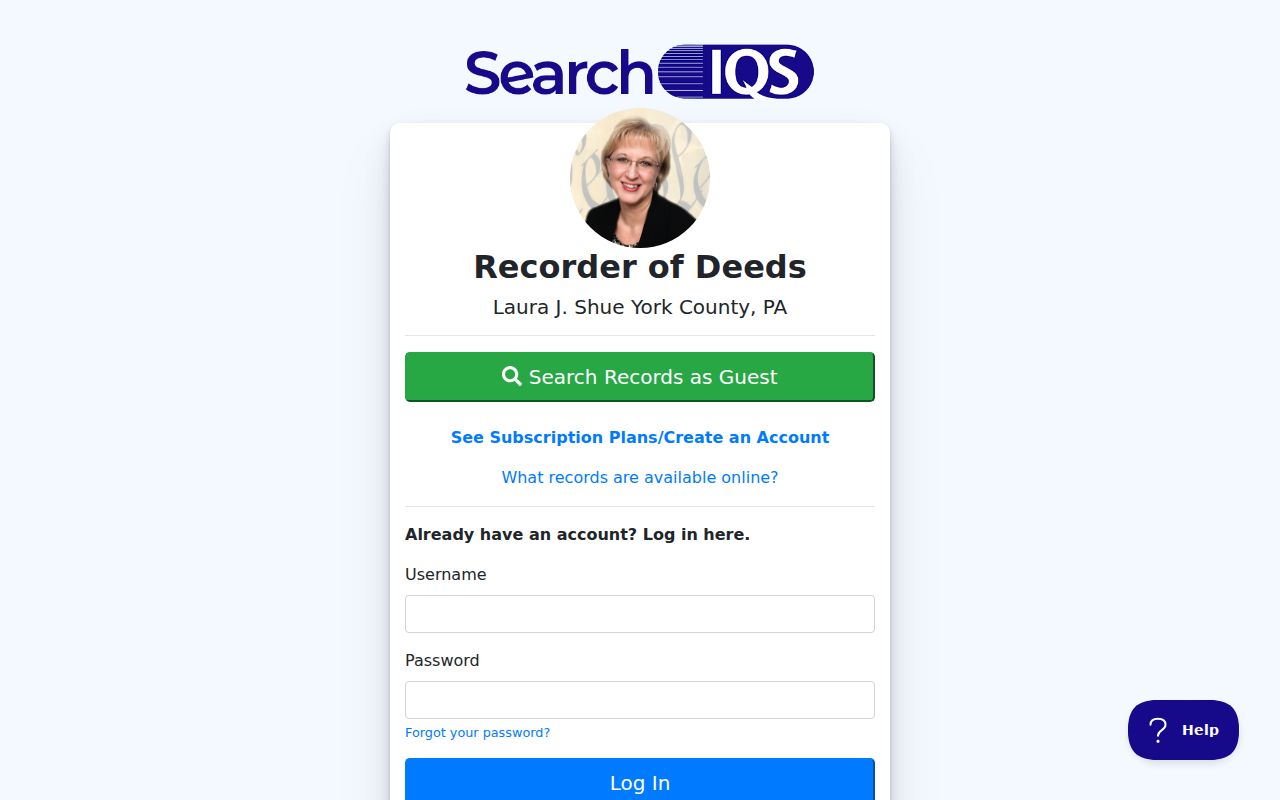
Use the IQS route to extend the title trail, not to infer that every early document or past household appears in a single online index.
York Township Past Resident Labels
Jurisdiction labels can change even when the land history continues. York Township formed in 1753. Dallastown incorporated in 1867, Red Lion in 1880, and Yoe in 1893 from denser southeast Township territory. A historic deed, census entry, or directory may therefore use York Township, a borough name, or a York postal heading. Search the legal parcel and the label used at the time instead of treating a modern municipal name as the only possible result.
No authoritative source reviewed established a Township-wide street-renumbering event. Do not invent one to explain a mismatch. Compare the legal description, lot or block, subdivision plan, and official map material. The Township's maps can provide boundary, road, parcel, and zoning context, but the legal parcel remains the stronger tie between past and present records.
York Township Past Resident Census
Directories and census schedules can add household evidence to a title trail, but their local availability must be confirmed. The York County History Center guide says that some city directories include York County communities and lists Pennsylvania septennial census years for York County: 1786, 1793, 1800, and 1807. Federal schedules through 1950 are public. A directory listing can be paired with a nearby census, then checked against the same address, community heading, deed date, and legal parcel.
Use this sequence for who lived here before: address and parcel citation → dated directory or telephone listing if a real edition exists → nearest public federal or septennial census → deed and estate evidence. The History Center and Local History Room have not published a verified York Township reverse-directory shelf or exact year run in the reviewed sources. Request their current catalog in person or through a research inquiry before naming a publisher, edition, or listed household.
That restraint matters. A directory can show a printed address association for its own date, while a census places a household at an enumeration date. Neither erases a deed's separate title history.
York Township Previous Resident Evidence
Township permit and map material can date physical changes to a property. A building or zoning file may identify an address, project, applicant or agent, plan review, inspection, and project date. It is property-event evidence, not a household roll. No public Township permit results database was identified. For an older-address question, make a written RTKL request that gives the street address or PIDN, project or record type, and an approximate year.
Submit the request to the Open Records Officer by email at RTK@yorktownshippa.gov, by mail, or in person. The request must be specific, give the desired medium and requester name and address, and receives an initial response within five business days. The Township need not create a record or perform a new compilation. Its 2025 and 2026 maps can help compare roads, parcels, urban or political boundaries, and zoning, but they do not resolve a historical occupant on their own.
The History Center's collection description references a 1910 county landowner map and Sanborn, school-district, topographic, and road maps. Ask its catalog about coverage for the exact address before claiming that a particular building appears on a map.
Note: Keep a permit, map, and deed as separately dated evidence instead of merging them into an unsupported household timeline.
York Township Past Resident Endpoints
When a deed or census trail reaches an estate or death event, York County Archives can provide specific historical leads. Its catalog identifies administration bond books from 1794 to 1978 and affidavits of death from 1877 to 1958, with indexed or scanned status varying by series. In 2026, the Archives reported digitized desertion, maintenance, and surety-of-peace dockets for 1876-1978 and papers for 1878-1899. Estate files from 1970-1985 were being scanned with access directed to the Register of Wills and Orphans' Court.
These records can close a family-history question or point to a date, estate, or related property interest. They do not convert an indexed name into proof of a complete household story. Search the Archives catalog by record type and date, then request the related file or series rather than relying only on a catalog hit.
York County Recorder resources provide the historical-channel context needed before a prior-residents search leaves the current online deed route.
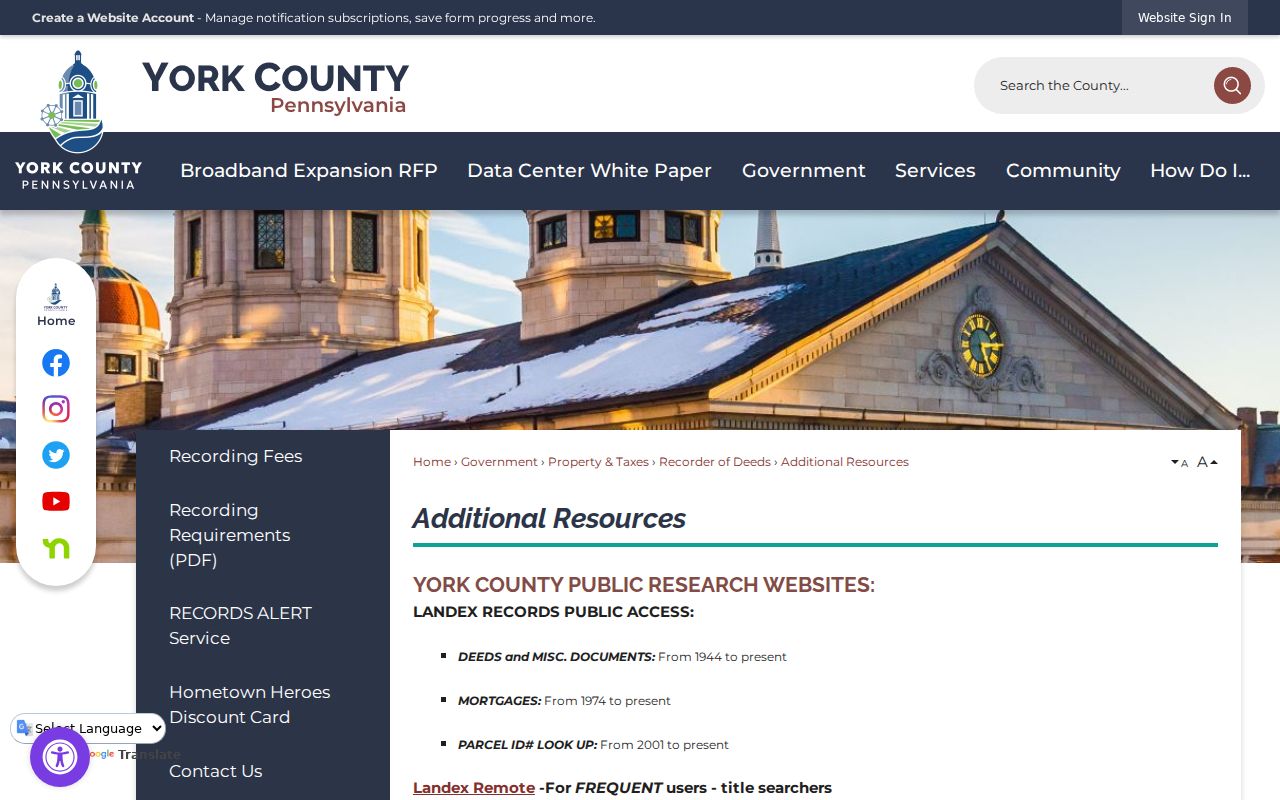
The Recorder resources help identify the next official channel when Landex alone does not reach the time period in question.
Previous Resident Research Limits
Previous residents research can reconstruct parts of an address history through parcels, ownership transfers, dated listings, and historical records. It cannot establish every person who occupied a property, and a current owner or tax-mailing field is not an occupancy claim. Protected addresses, redactions, and record-specific access rules can also limit what a custodian releases. Preserve an unresolved match rather than filling a gap with an unsourced name.
Lawful house-history use. York Township past-resident records are for personal, family-history, heir, property, or civic research. Do not use an address trail to stalk, harass, intimidate, or harm anyone. Pennsylvania's harassment and stalking laws, 18 Pa.C.S. §§2709 and 2709.1, can apply to misuse.
For a sound result, retain the parcel identifier, legal description, source name, date, and access channel with each record. The strongest answer shows what the evidence actually establishes and what remains uncertain.